
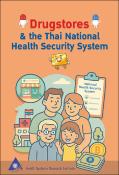
Drugstores and the Thai National Health Security System
| dc.contributor.author | Vichai Chokevivat | th_TH |
| dc.contributor.author | Pentipa Kaewketthong | th_TH |
| dc.contributor.author | Sripen Tantivess | th_TH |
| dc.contributor.author | Somruethai Supungul | th_TH |
| dc.contributor.author | Sorachai Jamniandamrongkarn | th_TH |
| dc.contributor.author | Kanitsak Chantrapipat | th_TH |
| dc.date.accessioned | 2026-02-20T09:13:46Z | |
| dc.date.available | 2026-02-20T09:13:46Z | |
| dc.date.issued | 2026-01 | |
| dc.identifier.isbn | 9789742992903 | |
| dc.identifier.other | he0154 | |
| dc.identifier.uri | http://hdl.handle.net/11228/6406 | |
| dc.description.abstract | Thailand’s National Health Security System resembles the system of the United Kingdom (UK) in three respects. First, it is entirely financed by tax revenue. Second, it sets co-payment rates in a similar manner. In the UK, services initially were provided completely free of charge. Four years later, in 1952, when Winston Churchill was re-elected as prime minister, a prescription charge of five pence (£0.05) was introduced for obtaining medicines. Subsequently, policies, criteria, and the fee schedule were revised on multiple occasions for various reasons. In Thailand, by contrast, a co-pay of 30 baht is charged per visit when receiving services. Third, the UK began its system by nationalizing hospitals, with the public accessing care initially through general practitioners (GP), who remained privately owned. In Thailand, the public is required to register with primary care units, most of which are publicly operated, with only a small number of private hospitals participating. Despite these similarities, there are several important differences between the UK and Thai universal coverage schemes, particularly with regard to drugstores. In the UK, the drugstore (pharmacy) system is separate from GP services: Physicians prescribe medicines on a prescription, and patients obtain their medicines from drugstores, where pharmacists dispense them. In contrast, Thailand’s primary care facilities— whether they are part of regional hospitals, general hospitals, community hospitals, or health stations (now upgraded to Subdistrict Health Promoting Hospitals)—have their own dispensaries or pharmacy departments within the healthcare facilities themselves. There have been continuous and long-standing efforts to integrate drugstores into Thailand’s National Health Security System, led by both the National Health Security Office (NHSO) and the Pharmacy Council, through pilot projects as well as policy advocacy. These efforts came to fruition toward the end of fiscal year (FY) 2019, and were formally launched at the beginning of FY 2020, on 1 October 2019. Subsequently, during the Covid-19 epidemic, additional initiatives were introduced to enable drugstores to provide services under the National Health Security System, initially allowing treatment for 16 minor (common) illnesses, later expanding to 32 conditions. Drugstores were also engaged to deliver health promotion and disease prevention services, areas in which service utilization had been relatively low. This volume is a product of the effort to distill lessons learned from the implementation of these three programs. The discussion begins by laying the groundwork with the background of the universal health coverage system, the Gold Card Scheme, drugstores in Thailand, and the relationship between drugstores and the National Health Security System. This is followed by a summary of the implementation outcomes of all three programs and a review of related researches. The volume concludes with reflections from representatives of drugstores participating in the programs, and a final summary. This resource is intended to provide stakeholders— including policymakers, service providers, service users, and the general public—with a comprehensive overview, so as to offer information that enables meaningful participation in system development and implementation. It is hoped that this will contribute to good governance of the National Health Security System, thereby genuinely enhancing the well-being of the Thai population and the nation at large. | th_TH |
| dc.description.sponsorship | Health Systems Research Institute | th_TH |
| dc.language.iso | en | th_TH |
| dc.publisher | Health Systems Research Institute | th_TH |
| dc.rights | สถาบันวิจัยระบบสาธารณสุข | th_TH |
| dc.subject | Drugstores | th_TH |
| dc.subject | Health Policy | th_TH |
| dc.subject | ภาวะผู้นำและการอภิบาล (Leadership and Governance) | th_TH |
| dc.title | Drugstores and the Thai National Health Security System | th_TH |
| dc.type | Document | th_TH |
| dc.subject.keyword | Thai National Health Security System | th_TH |
| .custom.citation | Vichai Chokevivat, Pentipa Kaewketthong, Sripen Tantivess, Somruethai Supungul, Sorachai Jamniandamrongkarn and Kanitsak Chantrapipat. "Drugstores and the Thai National Health Security System." 2026. <a href="http://hdl.handle.net/11228/6406">http://hdl.handle.net/11228/6406</a>. | |
| .custom.total_download | 9 | |
| .custom.downloaded_today | 0 | |
| .custom.downloaded_this_month | 1 | |
| .custom.downloaded_this_year | 9 | |
| .custom.downloaded_fiscal_year | 9 |
 | ผลงานวิชาการเหล่านี้เป็นลิขสิทธิ์ของสถาบันวิจัยระบบสาธารณสุข หากมีการนำไปใช้อ้างอิง โปรดอ้างถึงสถาบันวิจัยระบบสาธารณสุข ในฐานะเจ้าของลิขสิทธิ์ตามพระราชบัญญัติสงวนลิขสิทธิ์สำหรับการนำงานวิจัยไปใช้ประโยชน์ในเชิงพาณิชย์ |
Fulltext
Name: he0154.pdf
Size: 25.31Mb
Format: PDF
This item appears in the following Collection(s)
-
Documents/Pocket Books [636]
เอกสารเผยแพร่/พ็อกเกตบุ๊ก